10 Things Thermal Imaging Won’t Reveal About Termites
Thermal imaging is often marketed as the ultimate wonder technology—a sci-fi tool that can peer through plasterboard and expose termites in their deepest hiding spots. However, the reality is that thermal cameras are frequently oversold. Many inspection companies use the buzzword "Thermal Imaging Included" as a marketing gimmick without informing homeowners about the strict physical and regulatory limitations of infrared technology.
Under Australian Standard AS 4349.3 (Timber Pest Inspections), a standard termite inspection is strictly a visual and non-destructive process. While AS 3660.2 recognizes thermal imaging as a valuable secondary tool where further investigation is warranted, a thermal camera is not an X-ray machine. It measures surface temperature differentials—not the termites themselves.
Here are 10 situations where thermal imaging can be rendered completely useless:
1) Existing, Historic Damage
Thermal imaging relies entirely on active metabolic heat or anomalies caused by moisture signatures. If termites have already decimated a structural timber frame and moved on, they leave behind dry, hollow galleries. Because there is no active biological heat or moisture left in the timber, a thermal camera will show a completely normal surface profile, leaving severe, structurally dangerous historic damage entirely invisible.
2) Small Quantities of Termites
While destructive Australian species like Coptotermes acinaciformis like to keep their environment warm and regulated, a small sub-colony or a scouting party does not generate enough metabolic heat to influence the surface temperature of a wall lining. You need a massive, highly concentrated aggregation of active termites for a thermal camera to detect a noticeable "hot spot." Small, early-stage infestations will pass right under the radar of an infrared scan.
3) Thick, Dense Cavity Surfaces (e.g., Tiled Bathrooms)
An infrared camera can only read the temperature of the immediate surface it is aimed at. If termites are breaching a home through the wall cavity behind ceramic bathroom tiles, heavy internal brickwork, or thick timber cladding, the subtle heat signature they produce cannot radiate through the dense material. The camera only reads the temperature of the tiles, completely masking the subterranean threat directly behind them.
4) Recent Air Conditioning or Heating Use
Thermal cameras require a stable thermal environment to detect anomalies. If a homeowner has had the split-system air conditioning blasting prior to an inspection, it artificially cools the internal wall linings. Conversely, running a ducted heater creates artificial hot spots. These rapid internal temperature fluctuations mask the incredibly subtle heat variations caused by pests, effectively blinding the camera.
5) High Ambient Summer Temperatures
Thermal imaging relies entirely on a contrast between the termite colony and the surrounding structure. On a scorching 38°C Australian summer day, internal wall linings can easily heat up to match or exceed the ideal temperature of a termite cluster. When the wall temperature and the termite signature equilibrate, the termites become thermally camouflaged against the hot wall.
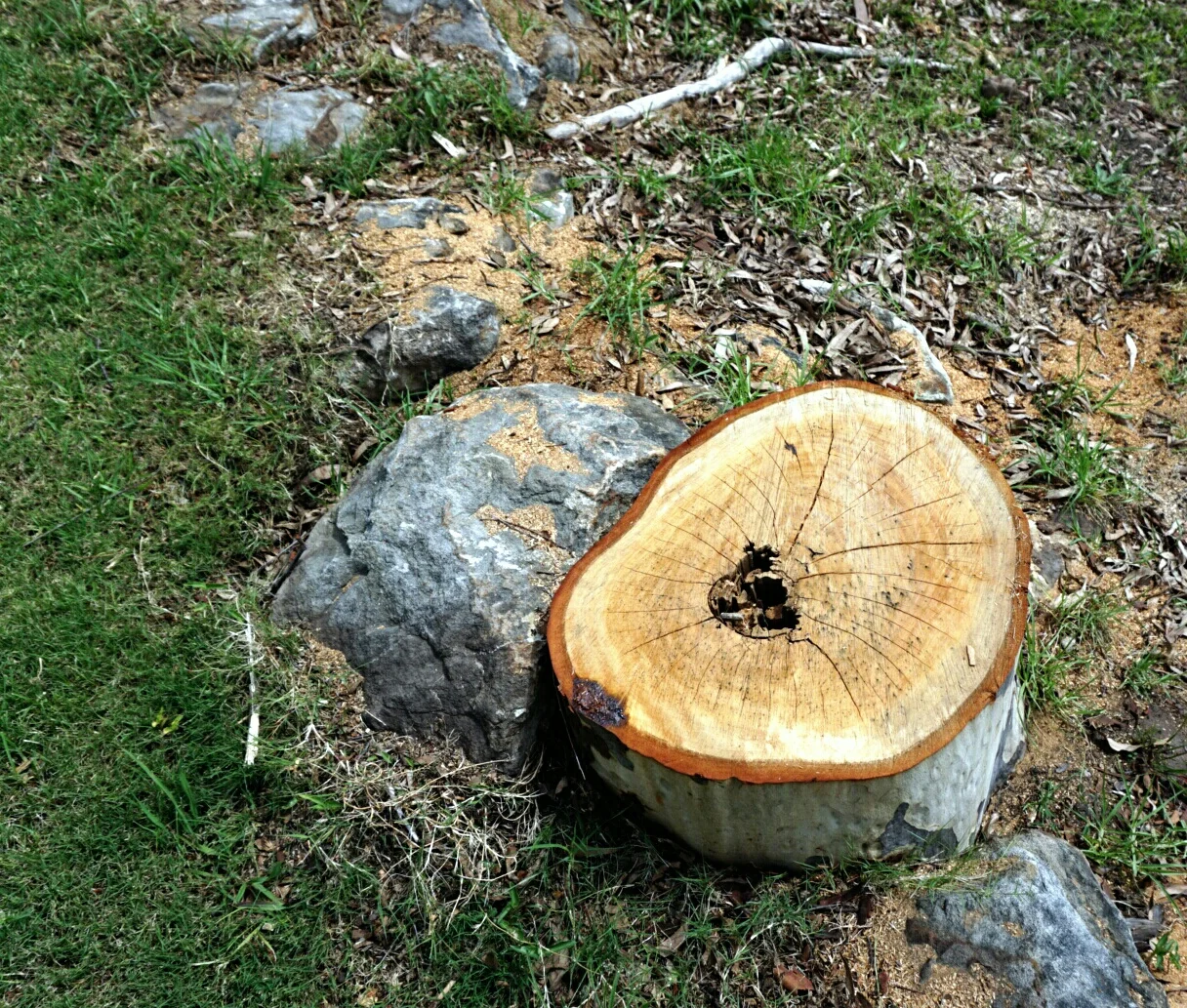
6) Termites Nesting in Living Trees and Stumps
Many native Australian termites establish their main parent nests inside the heartwood of living eucalypts or structural stumps in the yard. Because living trees possess complex internal fluid dynamics (sap movement) and thick, insulating bark, a thermal camera cannot detect termite activity hidden deep inside the trunk. AS 3660.2 emphasizes checking the surrounding grounds up to 50 metres from the main building, which requires physical sounding and drilling—not just pointing a camera at a tree.
7) Borers and Other Wood-Destroying Pests
Homeowners frequently assume a thermal camera can differentiate between different structural threats. It cannot. Other destructive timber pests common in Australia, such as the Queensland Pine Borer or the Common Furniture Beetle, do not aggregate in massive, high-moisture colonies the way subterranean termites do. Their solitary feeding habits generate virtually zero detectable heat, making them completely invisible to infrared technology.
8) High Structural Moisture Zone Masking
While thermal cameras are excellent at finding moisture (which shows up as a cold spot due to evaporative cooling), extreme moisture levels actually mask termites. If a wall has an active bathroom plumbing leak or severe rising damp, the massive, freezing thermal signature of the water will completely overpower and drown out the subtle heat signature produced by termites working within that same wet zone.
9) Modern Insulation Barriers (Foil Sarking and Batts)
Modern Australian homes are heavily wrapped in insulation to meet energy rating standards. Reflective foil laminate (Sarking) acts as a mirror to infrared radiation, reflecting the camera's own heat signature back at the technician. Thick fiberglass or outdoor batts are explicitly engineered to block heat transfer. If termites are traveling along the outer framework behind a layer of insulation, the thermal camera has zero chance of reading their heat signature through the thermal barrier.
10) Insufficient or Breached Termite Protection
While discovering active termites is a primary objective, determining whether a building has a compliant, unbreached termite management system is just as critical. A thermal camera cannot tell you if a chemical soil barrier (like Termidor) has expired, or if a physical barrier (like Termimesh) has been bridged by subsequent landscaping, pathways, or home extensions.
Just because a building doesn't show active termites on a thermal screen today doesn't mean it is protected. True security relies on a technician physically inspecting visual inspection zones, slab edges, and subfloors to ensure compliance with the AS 3660 series.
Rely on the Standards, Not Just the Screen
As laid out in AS 4349.3, there is no substitute for a thorough, physical, visual inspection. Thermal imaging is an excellent secondary diagnostic instrument in a licensed technician's toolkit, but it is a tool of confirmation, not a standalone solution.
A comprehensive, legally compliant termite inspection must always combine thermal technology with traditional, hands-on methods: physical sounding (tapping timbers with a donger to listen for hollow wood), moisture meters, and an intimate, licensed understanding of local termite biology.
If an inspector walks through a property relying solely on a thermal screen without tapping the timbers or crawling into the subfloor, they aren't providing an inspection—they are providing a false sense of security.
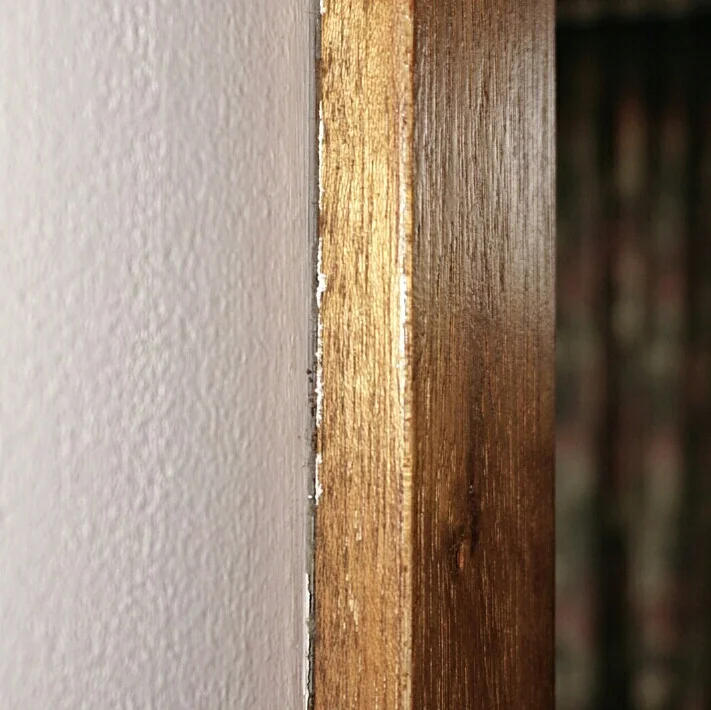
Minor termite mudding - such as on this architrave, would never show up on thermal imaging. Only a visual inspection could detect this.
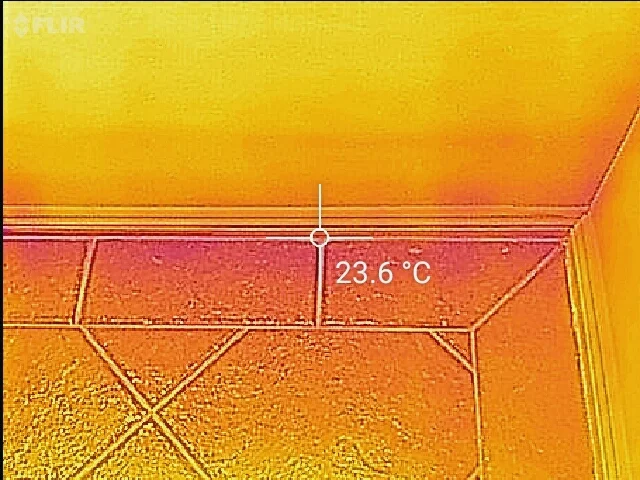
This skirting board showed no obvious signs of activity from a thermal imaging perspective, but there were termites behind which were picked up using a Termatrac.