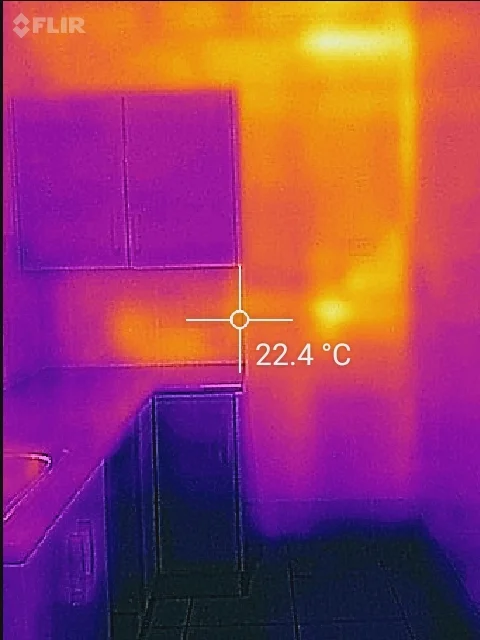
Top 10 Things thermal imaging won't reveal.

10 Things Thermal Imaging Won’t Reveal About Termites

Thermal imaging is often marketed as the ultimate wonder technology—a sci-fi tool that can peer through plasterboard and expose termites in their deepest hiding spots. However, the reality is that thermal cameras are frequently oversold. Many inspection companies use the buzzword "Thermal Imaging Included" as a marketing gimmick without informing homeowners about the strict physical and regulatory limitations of infrared technology.

Under Australian Standard AS 4349.3 (Timber Pest Inspections), a standard termite inspection is strictly a visual and non-destructive process. While AS 3660.2 recognizes thermal imaging as a valuable secondary tool where further investigation is warranted, a thermal camera is not an X-ray machine. It measures surface temperature differentials—not the termites themselves.

Here are 10 situations where thermal imaging can be rendered completely useless:

1) Existing, Historic Damage

Thermal imaging relies entirely on active metabolic heat or anomalies caused by moisture signatures. If termites have already decimated a structural timber frame and moved on, they leave behind dry, hollow galleries. Because there is no active biological heat or moisture left in the timber, a thermal camera will show a completely normal surface profile, leaving severe, structurally dangerous historic damage entirely invisible.

2) Small Quantities of Termites

While destructive Australian species like Coptotermes acinaciformis like to keep their environment warm and regulated, a small sub-colony or a scouting party does not generate enough metabolic heat to influence the surface temperature of a wall lining. You need a massive, highly concentrated aggregation of active termites for a thermal camera to detect a noticeable "hot spot." Small, early-stage infestations will pass right under the radar of an infrared scan.

3) Thick, Dense Cavity Surfaces (e.g., Tiled Bathrooms)

An infrared camera can only read the temperature of the immediate surface it is aimed at. If termites are breaching a home through the wall cavity behind ceramic bathroom tiles, heavy internal brickwork, or thick timber cladding, the subtle heat signature they produce cannot radiate through the dense material. The camera only reads the temperature of the tiles, completely masking the subterranean threat directly behind them.

4) Recent Air Conditioning or Heating Use

Thermal cameras require a stable thermal environment to detect anomalies. If a homeowner has had the split-system air conditioning blasting prior to an inspection, it artificially cools the internal wall linings. Conversely, running a ducted heater creates artificial hot spots. These rapid internal temperature fluctuations mask the incredibly subtle heat variations caused by pests, effectively blinding the camera.

5) High Ambient Summer Temperatures

Thermal imaging relies entirely on a contrast between the termite colony and the surrounding structure. On a scorching 38°C Australian summer day, internal wall linings can easily heat up to match or exceed the ideal temperature of a termite cluster. When the wall temperature and the termite signature equilibrate, the termites become thermally camouflaged against the hot wall.

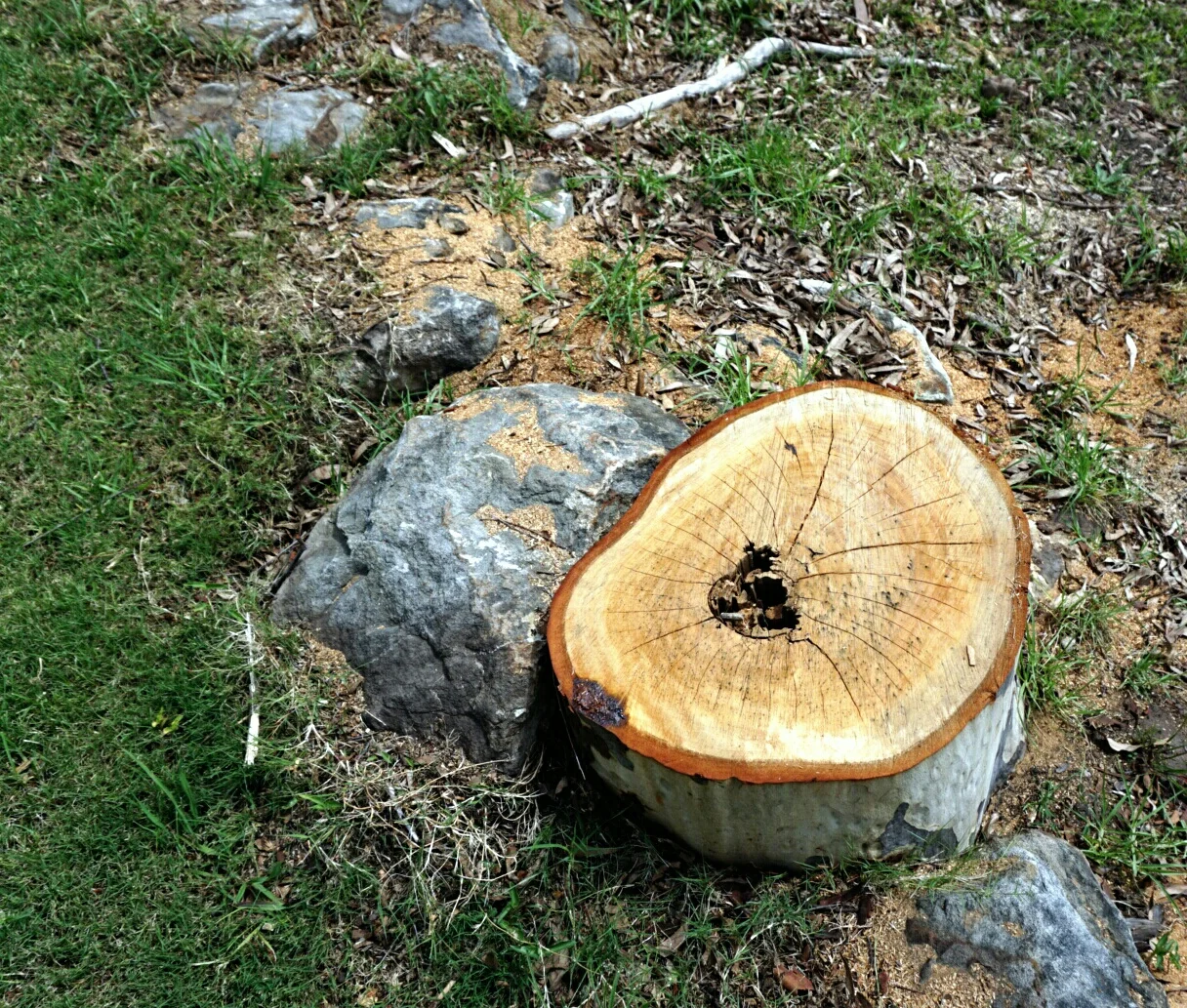
6) Termites Nesting in Living Trees and Stumps

Many native Australian termites establish their main parent nests inside the heartwood of living eucalypts or structural stumps in the yard. Because living trees possess complex internal fluid dynamics (sap movement) and thick, insulating bark, a thermal camera cannot detect termite activity hidden deep inside the trunk. AS 3660.2 emphasizes checking the surrounding grounds up to 50 metres from the main building, which requires physical sounding and drilling—not just pointing a camera at a tree.

7) Borers and Other Wood-Destroying Pests

Homeowners frequently assume a thermal camera can differentiate between different structural threats. It cannot. Other destructive timber pests common in Australia, such as the Queensland Pine Borer or the Common Furniture Beetle, do not aggregate in massive, high-moisture colonies the way subterranean termites do. Their solitary feeding habits generate virtually zero detectable heat, making them completely invisible to infrared technology.

8) High Structural Moisture Zone Masking

While thermal cameras are excellent at finding moisture (which shows up as a cold spot due to evaporative cooling), extreme moisture levels actually mask termites. If a wall has an active bathroom plumbing leak or severe rising damp, the massive, freezing thermal signature of the water will completely overpower and drown out the subtle heat signature produced by termites working within that same wet zone.

9) Modern Insulation Barriers (Foil Sarking and Batts)

Modern Australian homes are heavily wrapped in insulation to meet energy rating standards. Reflective foil laminate (Sarking) acts as a mirror to infrared radiation, reflecting the camera's own heat signature back at the technician. Thick fiberglass or outdoor batts are explicitly engineered to block heat transfer. If termites are traveling along the outer framework behind a layer of insulation, the thermal camera has zero chance of reading their heat signature through the thermal barrier.

10) Insufficient or Breached Termite Protection

While discovering active termites is a primary objective, determining whether a building has a compliant, unbreached termite management system is just as critical. A thermal camera cannot tell you if a chemical soil barrier (like Termidor) has expired, or if a physical barrier (like Termimesh) has been bridged by subsequent landscaping, pathways, or home extensions.

Just because a building doesn't show active termites on a thermal screen today doesn't mean it is protected. True security relies on a technician physically inspecting visual inspection zones, slab edges, and subfloors to ensure compliance with the AS 3660 series.

Rely on the Standards, Not Just the Screen

As laid out in AS 4349.3, there is no substitute for a thorough, physical, visual inspection. Thermal imaging is an excellent secondary diagnostic instrument in a licensed technician's toolkit, but it is a tool of confirmation, not a standalone solution.

A comprehensive, legally compliant termite inspection must always combine thermal technology with traditional, hands-on methods: physical sounding (tapping timbers with a donger to listen for hollow wood), moisture meters, and an intimate, licensed understanding of local termite biology.

If an inspector walks through a property relying solely on a thermal screen without tapping the timbers or crawling into the subfloor, they aren't providing an inspection—they are providing a false sense of security.
upload.jpeg

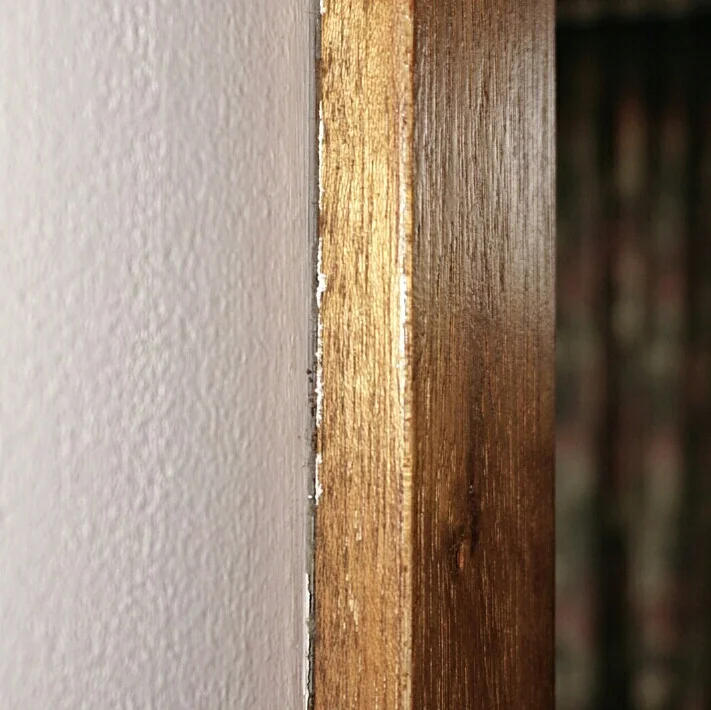
Minor termite mudding - such as on this architrave, would never show up on thermal imaging. Only a visual inspection could detect this.
upload.jpeg
upload.jpg

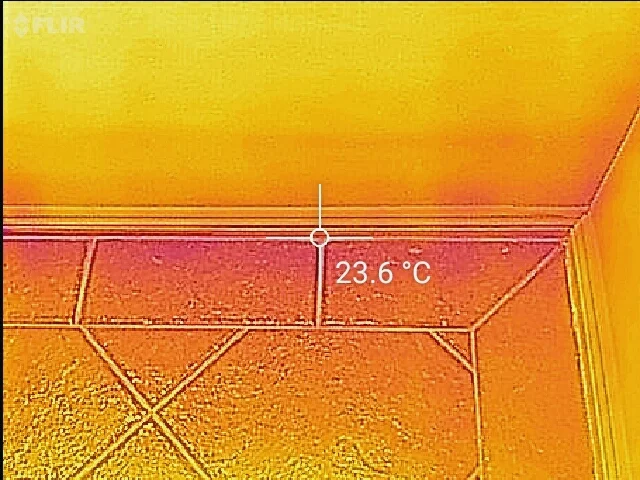
This skirting board showed no obvious signs of activity from a thermal imaging perspective, but there were termites behind which were picked up using a Termatrac.
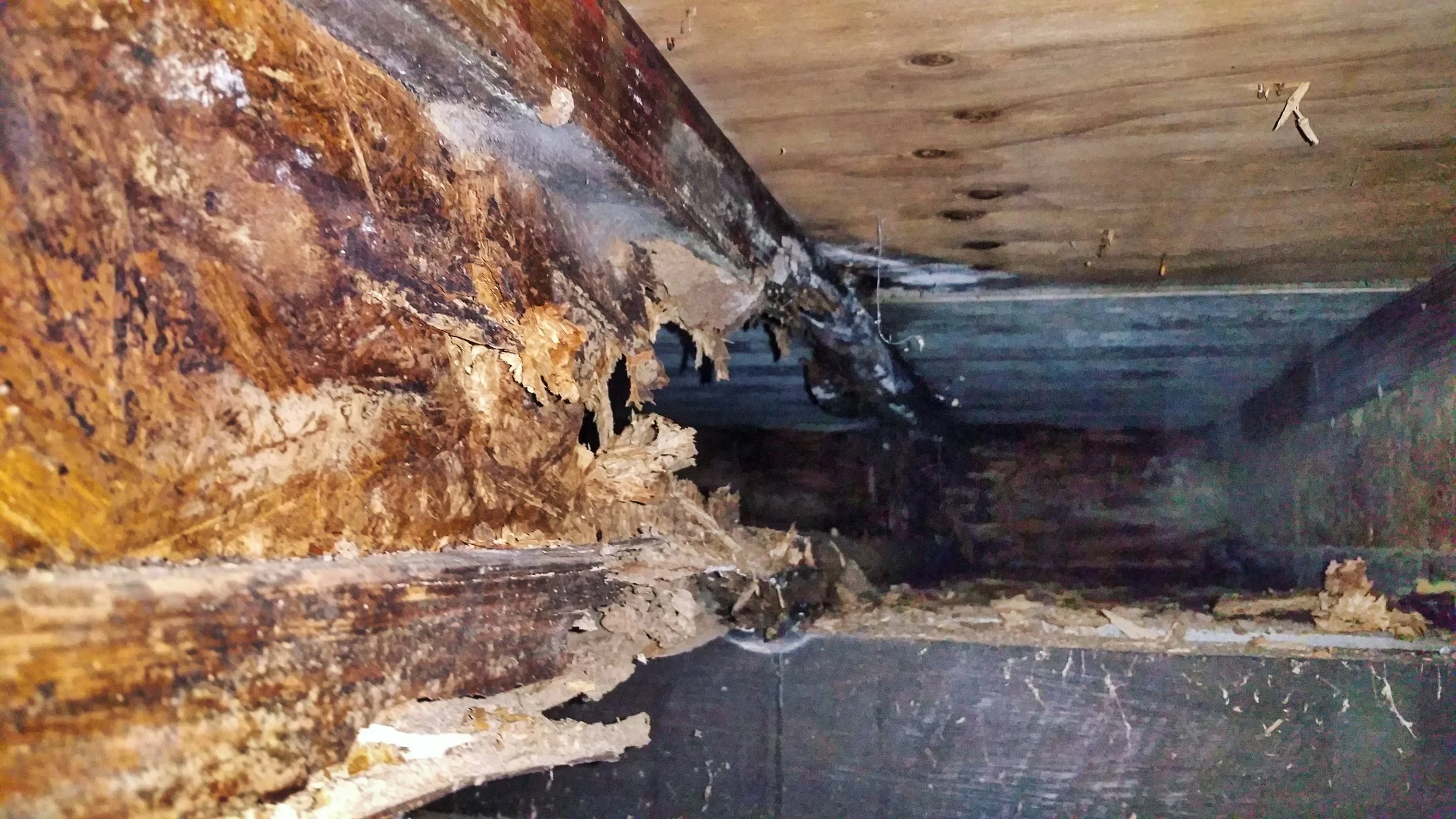
How damaging is wood rot to your home?

When you think about structural threats to your home, the first name that usually comes to mind is termites. We know the "white ants" can hollow out a beam while leaving the surface looking untouched.

However, there is another silent predator lurking in the damp, dark corners of many properties: Wood Rot.

While termites are often more famous, wood rot which is caused by fungal decay can be just as devastating to the structural integrity of your home. Here's how fungal decay works, why it’s so dangerous, and how it often acts as a "welcome mat" for termite infestations.

What Exactly is Wood Rot?

Despite the name, "wood rot" isn't caused by insects. It is actually a biological process caused by fungi.

Certain types of fungi thrive in the warm, humid environments common in many parts of Australia, the Central Coast being a prime example. These fungi require moisture to survive, and once they find damp timber, they begin to feed on the very components that make wood strong: cellulose and lignin.

As the fungi consume these organic compounds, the cellular structure of the timber literally breaks down. What was once a solid, load-bearing beam becomes soft, spongy, or brittle.

The Structural Impact: Why It’s a Serious Threat

The danger of wood rot lies in its ability to compromise the structural integrity of a building. Because rot is a biological decay process, it doesn't just scratch the surface, it eats the wood from the inside out.

1. Loss of Load-Bearing Capacity

The most critical danger is when rot affects "structural timber"—the beams, joists, and studs that hold up your roof and floors. As the fungi digest the lignin (the "glue" that holds wood fibers together), the timber loses its ability to support weight. This can lead to sagging floors, sticking doors, and in extreme cases, structural failure.

2. Brittle and Crumbling Materials

Some types of rot, known as "brown rot," cause the wood to shrink and crack into small, cube-like chunks. This makes the timber incredibly brittle. A beam that looks intact might crumble under the slightest pressure, making repairs much more complex and expensive.

3. The Domino Effect

Wood rot rarely stays in one place. Because fungi spread via microscopic spores carried by moisture, once a single area of your home becomes damp, the rot can spread through connected timbers, leading to widespread damage across your subfloor, window frames, or decking.

The "Deadly Duo": Wood Rot and Termites

For homeowners, the most important thing to understand is the relationship between rot and termites. They are often partners in crime.

Termites are highly attracted to moisture. When wood rot begins, it is a sign that the timber is damp and decaying. This creates the perfect, high-nutrient environment for termites to move in.

In many cases, a homeowner might notice a soft spot in a door frame (rot) and assume it’s just a plumbing issue, only to discover that termites have used that weakened, damp wood as an entry point to the rest of the house. If you have rot, you are at a significantly higher risk of a termite infestation. This is why wood rot is looked for and reported on when conducting a termite inspection.

Signs You Should Look Out For

How can you tell if fungal decay is taking hold? Keep an eye out for these red flags:

  1. Visible Discolouration: Dark, black, or brown patches on timber surfaces.

  2. Soft or Spongy Texture: If you press on a wooden surface and it feels "squishy" or leaves an indentation.

  3. Musty Odours: A persistent, earthy, or damp smell in certain areas of the house.

  4. Cracking or Crumbing: Wood that appears to be flaking off or breaking into small cubes.

  5. Presence of Fungi: Seeing mushrooms or "fruiting bodies" growing near your footings, decks, or window sills.

Prevention is Better Than Repair

The best way to combat wood rot is to manage moisture. Ensure your gutters are clean, your garden beds are sloped away from the house, and any leaks in plumbing are repaired immediately.

However, because rot and termites often go hand-in-hand, a routine professional inspection is vital.

Are you concerned about the condition of your timber?

Don't wait for the damage to become visible to the naked eye. Contact us today. Our specialist termite and structural inspections can help identify the early signs of decay and protect your home from the silent destruction of both rot and termites.

upload.jpg

This floor joist has been significantly damaged by fungal decay and is failing.

Timber isn’t the best material for landscaping.

I won't get termites in my retaining wall or garden bed, right? After all, it's treated!  

There is a certain amount of truth to this statement, however, other factors need to be considered.

  • Ineffectiveness of treatments - Some treatments are not effective in the long term and require regular re treatment, which of course, in the "real world" is seldom done.

  • Effective treatments can be dangerous - Some treatments effectively protect timbers from fungal decay and termites, however, they can be potentially more dangerous than we would like. (CCA)


1) Not all timbers are durable in the weather - Some timbers are able to withstand extreme weather and attack from pests, others, however, may not be so durable. 

Although some timbers are treated, this may preserve them for a period of time, these may not last extended period of time and may eventually fail to protect the timber.

Although this timber retaining wall was treated, after many years the treatment has failed to prevent fungal decay. Although no termites ate the timber, the fungal decay will eventually cause the timber to fail.

Although this timber retaining wall was treated, after many years the treatment has failed to prevent fungal decay. Although no termites ate the timber, the fungal decay will eventually cause the timber to fail.

Other treatments may be highly effective, but may be dangerous. At the moment, an effective treatment for preserving timber against termite attack and fungal decay is Copper Chrome Aresnate (CCA). If you think that sounds a lot like arsenic, you'd be right! It's still used for preserving timbers found at your local hardware stores. We actually managed to find several examples in a local hardware store chain here in Australia. Similar treated timbers are easily sourced in the USA and other countries as well. 

Studies suggest that the arsenic in CCA treated timber can can leach out through physical contact and via water contact.

Whatever treatment may have been used on this retaining wall post was no longer protecting it from termite damage.

Whatever treatment may have been used on this retaining wall post was no longer protecting it from termite damage.

These Termites Schedorhinotermes Sp. were discovered in a timber retaining wall on Lake Macquarie.

These Termites Schedorhinotermes Sp. were discovered in a timber retaining wall on Lake Macquarie.

The maintenance program on this timber retaining wall was not regular enough to prevent fungal decay.

The maintenance program on this timber retaining wall was not regular enough to prevent fungal decay.

Spotlight on Treated timber - Copper Chrome Arsenate. (CCA)

Isn’t arsenic a thing of the past? No, it’s still commonly used and you may find that it’s found in more places than you’d think.

A timber retaining wall such as this one is a common use of Copper Chrome Arsenate treated timber.

A timber retaining wall such as this one is a common use of Copper Chrome Arsenate treated timber.

Where will i find Arsenic around my home?

The most likely place is in treated pine sleepers. The arsenic is in the preservative treatment for the timber in the form of compounds of Copper, Chromium and Arsenic. The Copper prevents fungal attack, the Arsenic prevents insect (like termite) attack on the timber and the Chromium binds these two to the timber. It certainly is effective in preventing termites and other timber pests, but that’s not the scope of this post.

What does CCA treated timber look like?

CCA treated timber must be labeled as so when being sold prior to use, so you will likely see a label to that effect. Once in situ, the timber has a greenish tinge when newly treated, this will fade over time.

This H4 treated timber is clearly labeled as treated with Copper Chrome Arsenate.

This H4 treated timber is clearly labeled as treated with Copper Chrome Arsenate.

What are the risks?

Should I be worried about using CCA treated timber?

CCA treated timber is hazardous, and as such, in 2005 the Australian Pesticides and Veterinary Medicine Authority advised that timber containing CCA is not to be used for high contact structures such as playground equipment. Additionally on the 1st July 2012, new restrictions were in place which stipulates that CCA treated timbers need to be supplied to, and used by suitably qualified individuals based on the authorisation provided by a relevant state or territory law.

This wording can seem ambiguous and difficult to decipher, however, in simple terms: in our experience, at the time of writing, in NSW, Australia, CCA treated timber is readily and easily purchased from local hardware suppliers with little, if any enquiry or determination of the suitability of the material for such use. As a case in point, a client of ours purchased and built a cubby house for their children with CCA timber on the “window sill” of the cubby house. A high contact area!

A Cubby house Built with CCA treated window sills.

A Cubby house Built with CCA treated window sills.

Is it safe for my child to play on CCA Equipment?

According to International studies, children playing on CCA treated timber play equipment contributes between 2–8 per cent of the safe daily acceptable limits set by the World Health Organisation. It also is within the safe daily acceptable limits set by the Australian Department of Health and Ageing.

IMG_1467.JPG

What can I do to protect myself and my family?

There is much research into the effects of CCA when touched through normal use in timber structures, and the statistics and conclusions vary. However, based on the Western Australian Department of health, there are some minimum precautions that can be taken.

  1. Wash children’s hands after using play equipment.

  2. Put food onto plates and napkins rather than directly on a wooden picnic table.

Additionally, some research suggests there is some benefit in painting timber to limit exposure to arsenic, painting with an oil based paint or stain may reduce the exposure. The coating will need to be applied every 12-18 months.

When it comes to raised garden beds, if you’re using CCA treated timber for your vegetable garden, you may want to line the inside with plastic before adding soil and keep plants away from the edge of the garden bed. Although the preservative is designed to remain locked in the timber there could be some leeching. This will help minimise edibles absorbing preservative compounds from the timber.

This vegetable garden bed could do with some lining to minimise any preservatives from the timber entering the edible plants!

This vegetable garden bed could do with some lining to minimise any preservatives from the timber entering the edible plants!

Will firewood bring termites to my home?

Who doesn't love a nice roaring fire to keep warm and cozy this winter? You need to exercise caution however, as pyromania has dangers beyond the obvious.

A roaring fire is loved by many during winter!

A roaring fire is loved by many during winter!

On a cold night, you don't want to have to travel far to grab some timber to top up your fire. The problem however, lies in the stored firewood. 

A large pile of lumber is a comforting sight before winter.

A large pile of lumber is a comforting sight before winter.

Termites* love timber, the more the better. A huge pile of lumber is about as attractive as it gets for a termite colony, once the termites detected a good food source, then they will communicate with other members of the colony to inform them of the smorgasboard they have discovered. 

This will not only bring in more members to feed on the timber that they have found, but subterranean termites are eternal foragers, too much is never enough, so they will continue to forage in the vicinity of the food source. Now imagine that this is happening right next to your home! 

IMG_0268.jpg

This wood pile had a few extra guests. With termites eating away at the timber in this wood pile.  

We recommend not having your firewood stored in ground contact, additionally, any timber that you keep near your home (you know, for easy access on a cold night!) needs to be stored up off the ground and definitely not abutting the house. 

Can I bring subterranean termites into my home if I inadvertently bring in a piece of timber with termites in it? 

The simple answer is no, aside from the fact that they will soon be fried! Subterranean termites are social creatures, as such they need to be in contact with the rest of the colony, a few termites, brought in by a lump of timber pose no threat to the home. 

Additionally, the termites need moisture to survive, a warm, dry house will ensure that they won't survive for any appreciable amount of time.

There may be other pests in the timber which can be a pain to deal with, but Subterranean termites are not your major concern here.  

In conclusion, we recommend that firewood be stored away from the home, in an elevated position away from ground contact. If you must store firewood sitting it on a continuous pour concrete slab with no joins will eliminate undetected termite entry as long as you can see clearly around the edge of the slab.  

Timber stored in this shed with a concrete floor was still on the menu, but the signs were obvious.

Timber stored in this shed with a concrete floor was still on the menu, but the signs were obvious.

*For the purpose of this blog post, we are writing about subterranean termites and not drywood or dampwood termites. Although rare, they are seen on coastal areas of Australia and are not known for causing major economic damage in Australia.

Sentricon Always Active - The Future of Baiting!

We are proud to be supplying a new termite bait product in Australia! Servicing the Central coast and Newcastle region with a revolutionary new way of killing termites.

Baiting is not only a way of eradicating a termite colony in a home, but can also be used to kill off colonies as they forage for food near a structure - thus providing protection. 

This can be particularly useful when a chemical barrier is not viable due to construction restrictions.  

See the video below to find out how the Sentricon Always active system works!

Sentricon AlwaysActive is the future of termite management; what homeowners have always thought a termite bait should be. But it's not a bait! Active from installation, Sentricon does not contain a bait but a revolutionary termiticide rod. Termite colonies may be eliminated before you ever know they exist!

A Sentricon bait station being checked for activity.

A Sentricon bait station being checked for activity.

Contact us for a free quote or more information. Ph: 0474 962443


Oodles of delicious sentricon stations ready for installation. The always active rods in the stations will protect the home from the moment we install them!

Oodles of delicious sentricon stations ready for installation. The always active rods in the stations will protect the home from the moment we install them!

A Sentricon always active rod is eaten out within months of being installed. This highlights it's palatability.

A Sentricon always active rod is eaten out within months of being installed. This highlights it's palatability.

A Sentricon rod completely eaten out not long after the system was installed.

A Sentricon rod completely eaten out not long after the system was installed.

Do termite barriers work?

There is often great discussion in the pest control industry about what products work and what products don't work, often the discussion is about termite barriers. 

The problem with making statements like " 'X' termite barrier doesn't work because I saw infestation 'Y' " is that the limitations and scope of the barrier are seldom included in the statement.

The reality is that, for the most part, termite barriers DO work, the problem usually occurs in the installation. 

Here are some prime examples of termite barriers that have been incorrectly installed. 

A termite barrier is tucked underneath a bearer, allowing for undetected termite entry.

A termite barrier is tucked underneath a bearer, allowing for undetected termite entry.

This barrier is hidden behind a pier, since it's not directly attached to the ant capping, termites could easily climb up behind the pier without being seen.

This barrier is hidden behind a pier, since it's not directly attached to the ant capping, termites could easily climb up behind the pier without being seen.

Once again, the barrier does not make it all the way out to an inspection edge under the bearer.

Once again, the barrier does not make it all the way out to an inspection edge under the bearer.

Should I get my own timber pest inspection report?

When purchasing a home, a building and timber pest inspection are required to find out if there are any problems with the structure or if there are any timber pests.  

Who should organise this? 

Inspections can be organised by a number of parties, but some present a conflict of interest.

i) The Vendor - The vendor is ideally looking for a report that says the home has a "clean bill of health"; as such, if they engage a pest and/or building inspector, there is a possibility that the inspector is put under duress to present the report in the most favourable possible light. 

ii) The real estate agent -  is looking primarily after the interests of a vendor. By definition, the real estate agent has the primary role of selling the property. If they engage an inspector, they could possibly try to engage one that will be more "easy going", less fastidious in finding potential problems with the property. 

iii) The purchases conveyancer - If you're buying, then your conveyancer may organise the Inspection as a matter of due diligence. This wholesale outsourcing of inspections can present a problem if the inspector is possibly asked to provide cut price inspections or is too busy to perform thorough inspections. Although acting in your behalf, it's just a matter of a few minutes whilst your discussing the purchase with your conveyancer to find out who they use and check a few reviews. 👌🏻

iv) The purchaser - this is the most ideal candidate for organising a timber pest and building inspection, but there are potential pitfalls. Often, the purchaser can be financially stretched to the limit, especially with real estate prices rocketing. The temptation can be to find the "best deal", not all timber pest inspectors are created equal. The cheaper the price, the quicker the report, the quicker the report, the greater the possibility something will be missed. You're better off spending a bit more and getting a quality, detailed report rather than a cheap one.  

Will your Inspection include photos and inform you of potential problems? The best way to know may be to organise it yourself.

Will your Inspection include photos and inform you of potential problems? The best way to know may be to organise it yourself.


There are potential problems in each of these scenarios, and not all inspectors are created equal, a conflict of interest can arise in each case.

Ideally, its best to look into each scenario and make an informed decision that you're comfortable with. In theory, there isn't a problem with each of these options, in practice, our experience has been otherwise. 

Either way, do your homework, use reputable, licenced and insured inspectors and your possibility of surprises will be reduced.  


The Area around the property should also be checked to reveal potential threats.

The Area around the property should also be checked to reveal potential threats.