
See a huge termite gallery that originates in a subfloor - along the ground and then travels up a pier to the underside of the flooring in a home. It highlights an obvious infestation and underscores the need for regular inspections.
Read MoreAnts found during a termite inspection.
Although we are looking for termites during our inspections, we inform our clients on anything which could be a problem in their home. Here we have an infestation of ants found during an inspection - they were in a cupboard in the subfloor. They were promptly dealt with!
Termatrac - Detecting termites in difficult places.
Termites often like to hide out in concealed places, it's the very nature of their existence, so it's important to have the right tools to find them.
We use a Termatrac extensively during our inspections, it helps us to identify termite activity or often just for peace of mind that there really is no activity. The unit uses a radar to bounce signals into wood and other materials to determine if there's movement, it's so sensitive that it's best to set up on a tripod as you can see in the pictures. The benefit is that we can get an extremely accurate understanding of what's happening inside walls and means we don't have to do any destructive inspecting.

Checking a door jamb where evidence of termite mudding existed.

The unit sends signals deep into the timber to accurately measure movement.

Termites were discovered in this wall because of the Termatrac.
It's abandoned - termite bait stations!
Termite bait stations can be a very effective method of controlling termites, but only if the system is maintained. More often than not, a building with bait stations has an infestation due to a lack of proper maintenance of the perimeter baiting system. It's not uncommon for us to be called to a house with an infestation that already had a perimeter bait station monitoring system in place. When we check the bait stations, the attractant wood has been eaten out long ago......
So what can be done?
Well, the safest thing is to make sure that you have a reputable pest controller monitoring the bait stations, this may seem costly but it is so much cheaper than dealing with an infestation and subsequent damage.
Failing that, it may be prudent to check the bait stations yourself. At least something is being done to monitor termite activity, if you find termites, then you can call a pest controller (The Termite Trackers!) to eradicate the colony.
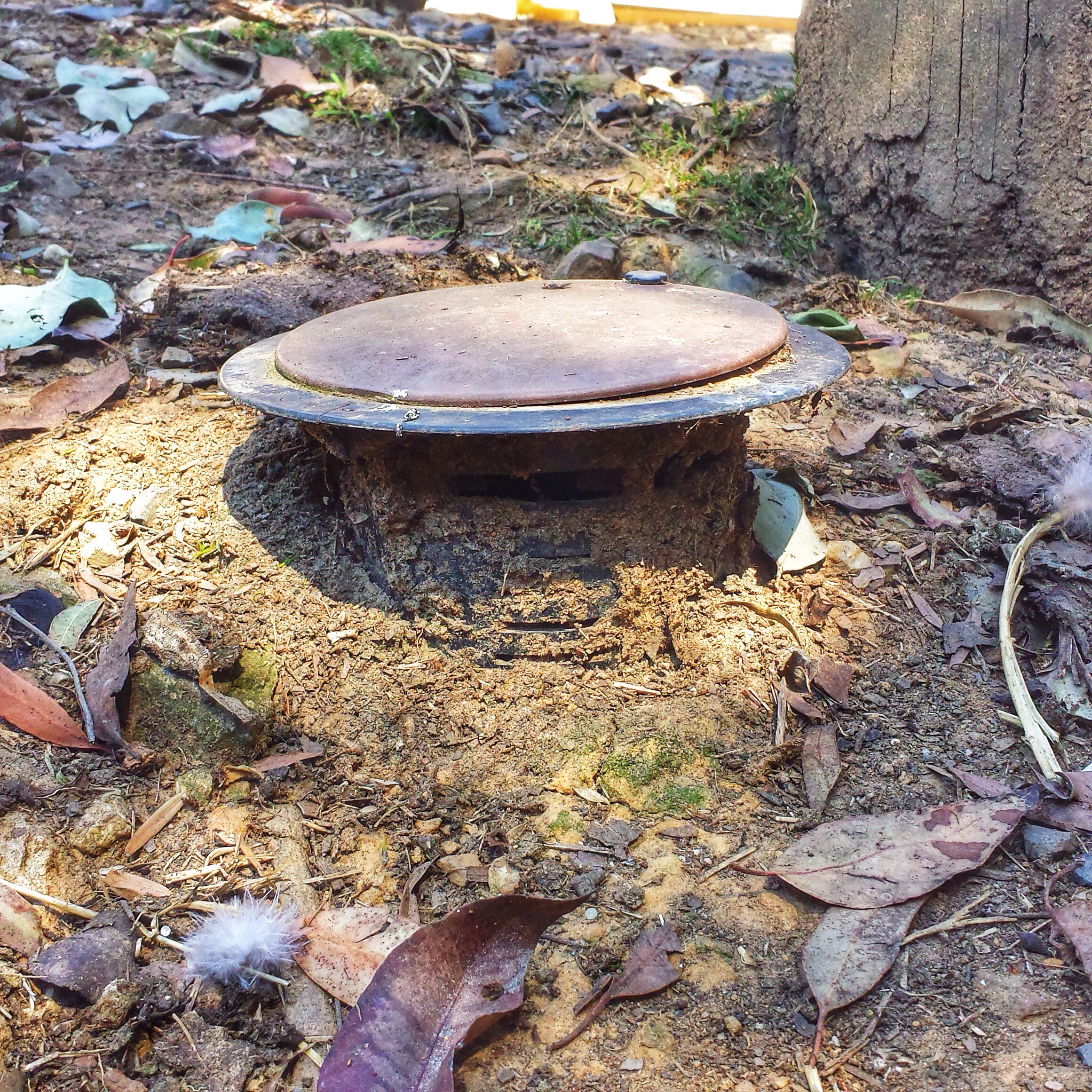
This bait station is far from effective as it is protruding significantly, the top should be flush with ground level.

This bait station was very close by to an termite entry point on a house, as you can see the termites have already eaten most of the wood out before abandoning it.

A Sentricon bait station graveyard, these bait stations were monitored for a while but have now been abandoned....

this bait station hadn't been checked for years....
Subfloor covering
Access to the subfloor area of a house is vital for a proper termite inspection. More often than not, if there is a termite infestation then there will be evidence in the subfloor. Not only that, but anything that might be inviting termites into the building will probably be evident in the subfloor (Think leaking pipes and random bits of timber stored in the subfloor)
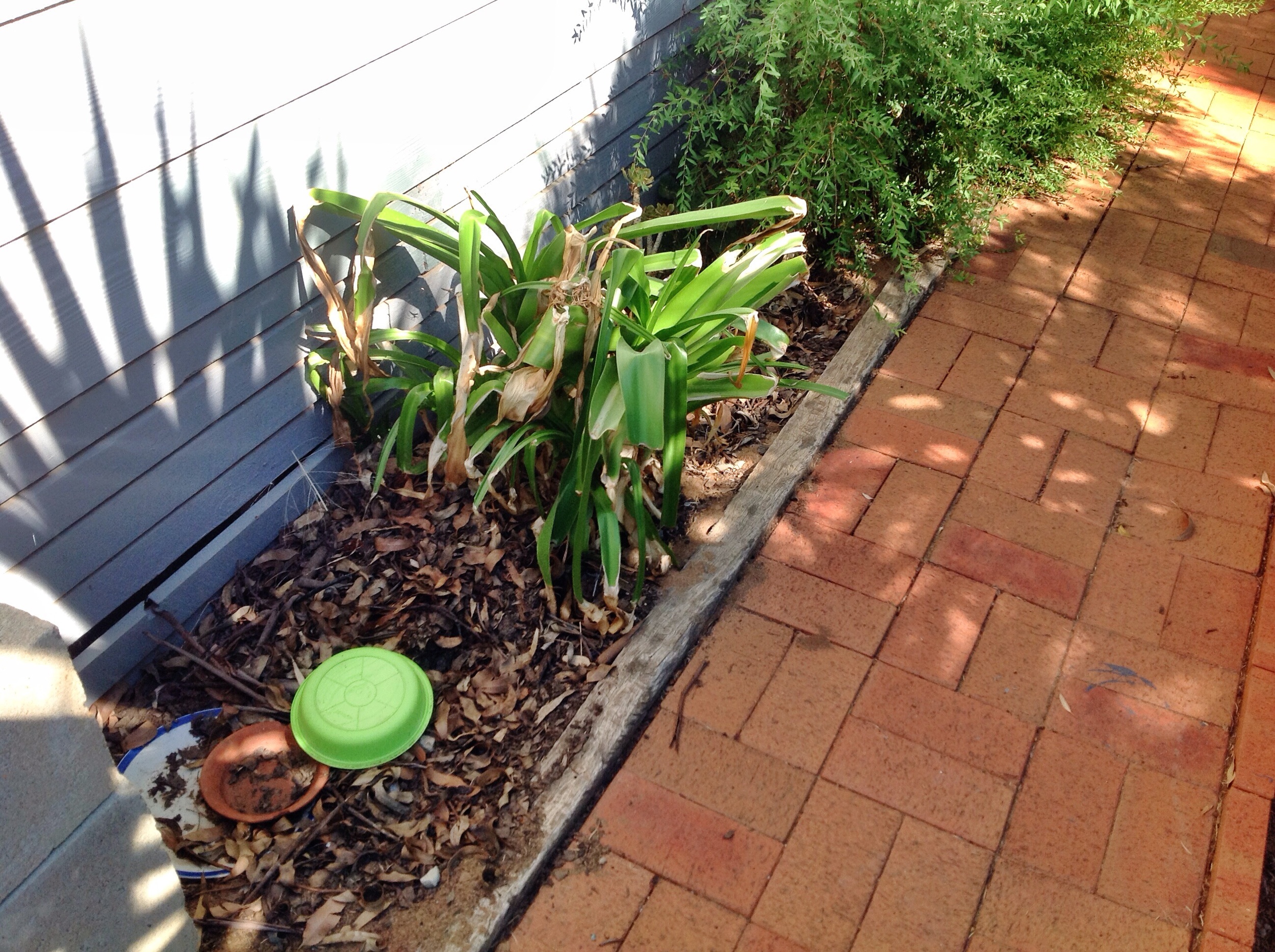
This garden area not only restricts access to the subfloor, but the plants and decaying organic matter is like a billboard inviting the termites in!

There's little hope of doing a good termite inspection with this much foliage! (And a greater chance of finding termites!)

Not only do the plants against the building compromise the building, but having the timber in the garden makes a great appetizer for the termites before they make it inside.
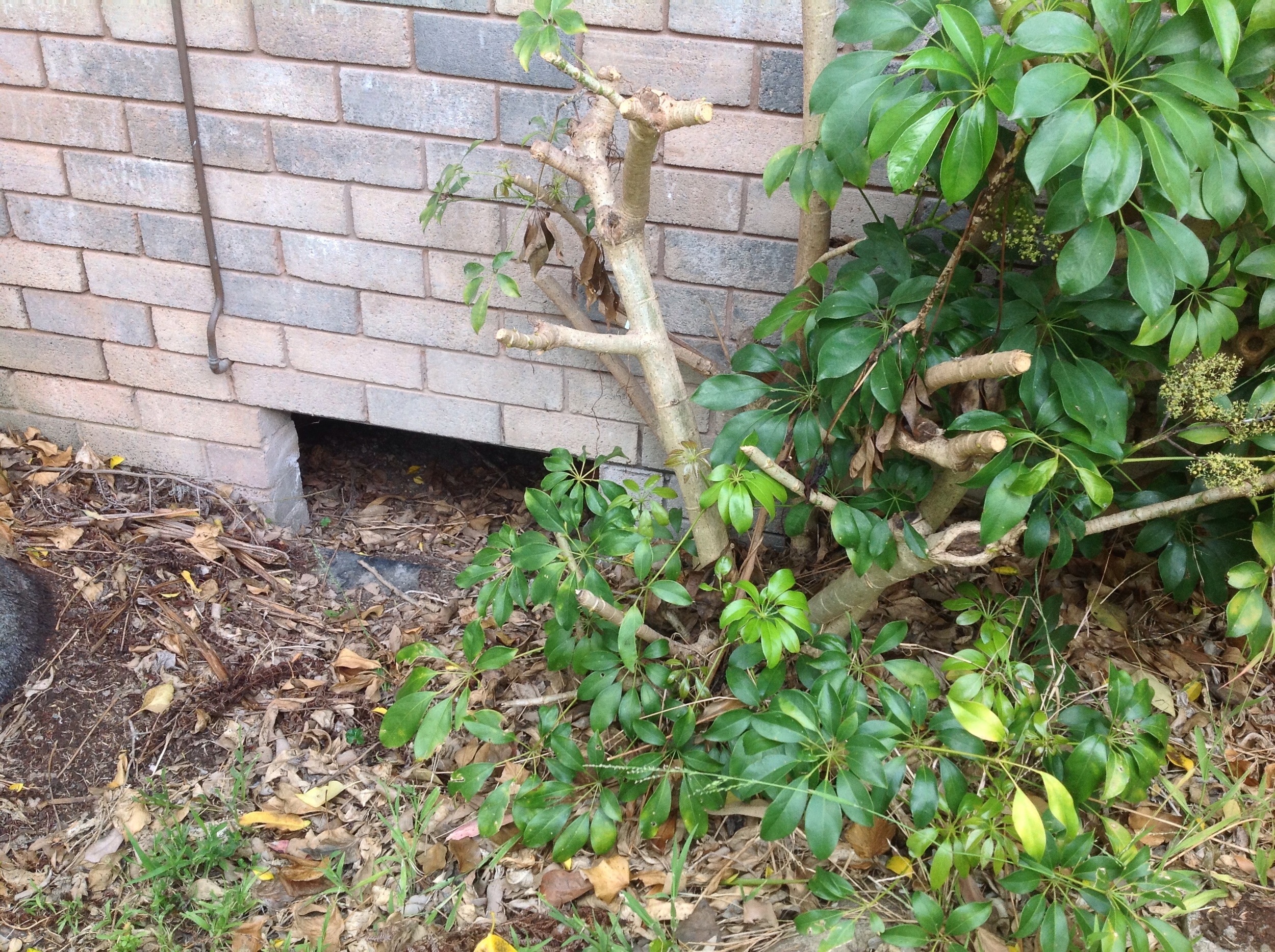
This subfloor opening was ONLY JUST big enough!
Wood rot - timber in garden areas.
A rotting landscaping timber - due to constant moisture being present.

Quite often, wood rot is overlooked as a timber pest. But fungal decay can be a great cause of timber damage, as well as a sign that timbers are susceptible to termite attack.
It's important that any timber that is in ground contact is treated, and if it's not in ground contact that it's sealed. Otherwise it will easily rot especially if the climate or environment around the timber allows a constant supply of high ambient moisture to feed the fungus.

His timber post wasn't even in contact with the soil, but it's exposure to the elements have allowed it to rot significantly.
Extensive damage - often concealed!

Extensive termite workings, the termites made themselves right at home, then invited all their friends and family over for an all you can eat buffet....
Termites make themselves right at home in yours. This infestation was an extensive one, with large amounts of damage done to structural timbers on this house. Interestingly (or maybe not so much) the extent of the damage was only fully realised after the plaster board was removed and the frames visually inspected.
Potential problems..waiting to happen.
Building using recycled materials certainly makes ecological sense, however, they need to be understood so as to be used most effectively. Used railway sleepers are often used in new building work, but they are usually not treated and can also be a problem when attached to a building. It's best to avoid using any recycled susceptible timber if it comes into contact with the ground.

A retaining wall/landscaping timber attached to a building, causing a potential breaching point for termites.

These timbers will negatively impact both a physical and chemical barrier.
Why regular inspections are important.

Termite Mud tubs in a subfloor space.
Regular termite inspections are an important part of any home maintenance program, as can be seen by this photo. The homeowner was getting a regular inspection when these mud tubes were noticed with termites building them up. This indicated that termites were living in the subfloor and it would only be a matter of time before they would find their way into the timber of the house.