
When you think about structural threats to your home, the first name that usually comes to mind is termites. We know the "white ants" can hollow out a beam while leaving the surface looking untouched.
However, there is another silent predator lurking in the damp, dark corners of many properties: Wood Rot.
While termites are often more famous, wood rot which is caused by fungal decay can be just as devastating to the structural integrity of your home. Here's how fungal decay works, why it’s so dangerous, and how it often acts as a "welcome mat" for termite infestations.
What Exactly is Wood Rot?
Despite the name, "wood rot" isn't caused by insects. It is actually a biological process caused by fungi.
Certain types of fungi thrive in the warm, humid environments common in many parts of Australia, the Central Coast being a prime example. These fungi require moisture to survive, and once they find damp timber, they begin to feed on the very components that make wood strong: cellulose and lignin.
As the fungi consume these organic compounds, the cellular structure of the timber literally breaks down. What was once a solid, load-bearing beam becomes soft, spongy, or brittle.
The Structural Impact: Why It’s a Serious Threat
The danger of wood rot lies in its ability to compromise the structural integrity of a building. Because rot is a biological decay process, it doesn't just scratch the surface, it eats the wood from the inside out.
1. Loss of Load-Bearing Capacity
The most critical danger is when rot affects "structural timber"—the beams, joists, and studs that hold up your roof and floors. As the fungi digest the lignin (the "glue" that holds wood fibers together), the timber loses its ability to support weight. This can lead to sagging floors, sticking doors, and in extreme cases, structural failure.
2. Brittle and Crumbling Materials
Some types of rot, known as "brown rot," cause the wood to shrink and crack into small, cube-like chunks. This makes the timber incredibly brittle. A beam that looks intact might crumble under the slightest pressure, making repairs much more complex and expensive.
3. The Domino Effect
Wood rot rarely stays in one place. Because fungi spread via microscopic spores carried by moisture, once a single area of your home becomes damp, the rot can spread through connected timbers, leading to widespread damage across your subfloor, window frames, or decking.
The "Deadly Duo": Wood Rot and Termites
For homeowners, the most important thing to understand is the relationship between rot and termites. They are often partners in crime.
Termites are highly attracted to moisture. When wood rot begins, it is a sign that the timber is damp and decaying. This creates the perfect, high-nutrient environment for termites to move in.
In many cases, a homeowner might notice a soft spot in a door frame (rot) and assume it’s just a plumbing issue, only to discover that termites have used that weakened, damp wood as an entry point to the rest of the house. If you have rot, you are at a significantly higher risk of a termite infestation. This is why wood rot is looked for and reported on when conducting a termite inspection.
Signs You Should Look Out For
How can you tell if fungal decay is taking hold? Keep an eye out for these red flags:
Visible Discolouration: Dark, black, or brown patches on timber surfaces.
Soft or Spongy Texture: If you press on a wooden surface and it feels "squishy" or leaves an indentation.
Musty Odours: A persistent, earthy, or damp smell in certain areas of the house.
Cracking or Crumbing: Wood that appears to be flaking off or breaking into small cubes.
Presence of Fungi: Seeing mushrooms or "fruiting bodies" growing near your footings, decks, or window sills.
Prevention is Better Than Repair
The best way to combat wood rot is to manage moisture. Ensure your gutters are clean, your garden beds are sloped away from the house, and any leaks in plumbing are repaired immediately.
However, because rot and termites often go hand-in-hand, a routine professional inspection is vital.
Are you concerned about the condition of your timber?
Don't wait for the damage to become visible to the naked eye. Contact us today. Our specialist termite and structural inspections can help identify the early signs of decay and protect your home from the silent destruction of both rot and termites.
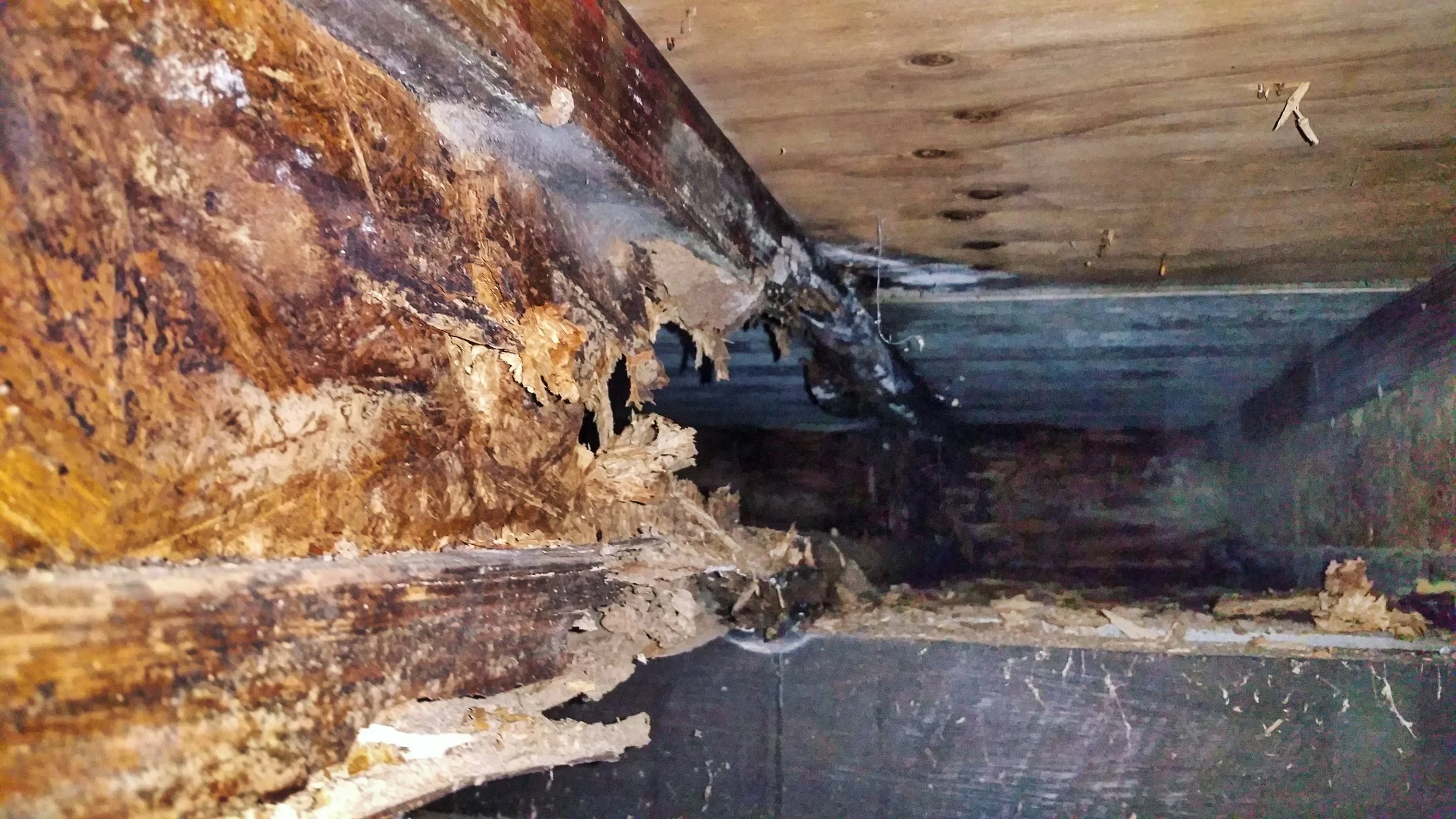
This floor joist has been significantly damaged by fungal decay and is failing.

